Our Research
The Saint-Louis Lab Research Focus
The Saint-Louis Lab investigates molecular design at the interface of organic synthesis, photochemistry, and functional materials. Our work centers on two areas:
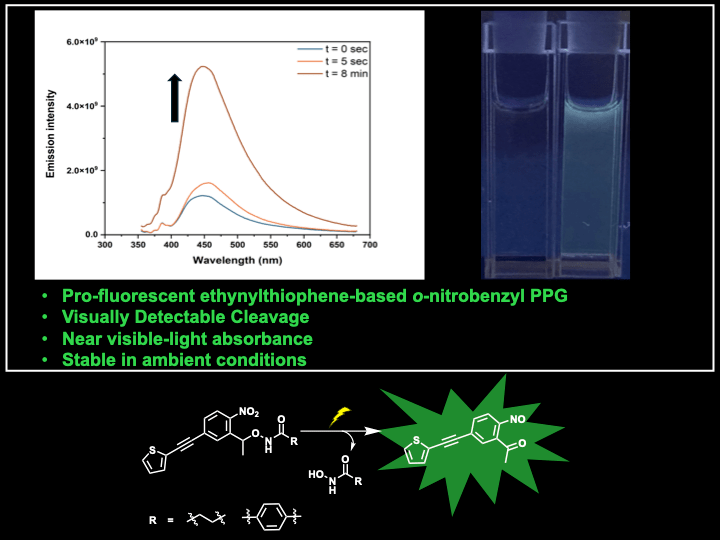
- Photolabile Protecting Groups (PPGs): We are developing a new class of thiophene-based o-nitrobenzyl photolabile protecting groups that absorb in the visible region of the electromagnetic spectrum, allowing milder reaction conditions and more selective light-triggered activation than traditional UV-responsive systems. A key target is the synthesis and controlled release of hydroxamic acids, which serve as important building blocks for anti-cancer drug candidates and are often challenging to prepare and handle by conventional routes. By incorporating these PPGs into light-responsive smart materials, we aim to enable on-demand photo cleavage of such biologically relevant molecules. This strategy broadens the scope of applications to targeted drug delivery, photo-responsive polymer architectures, and dynamic molecular devices.
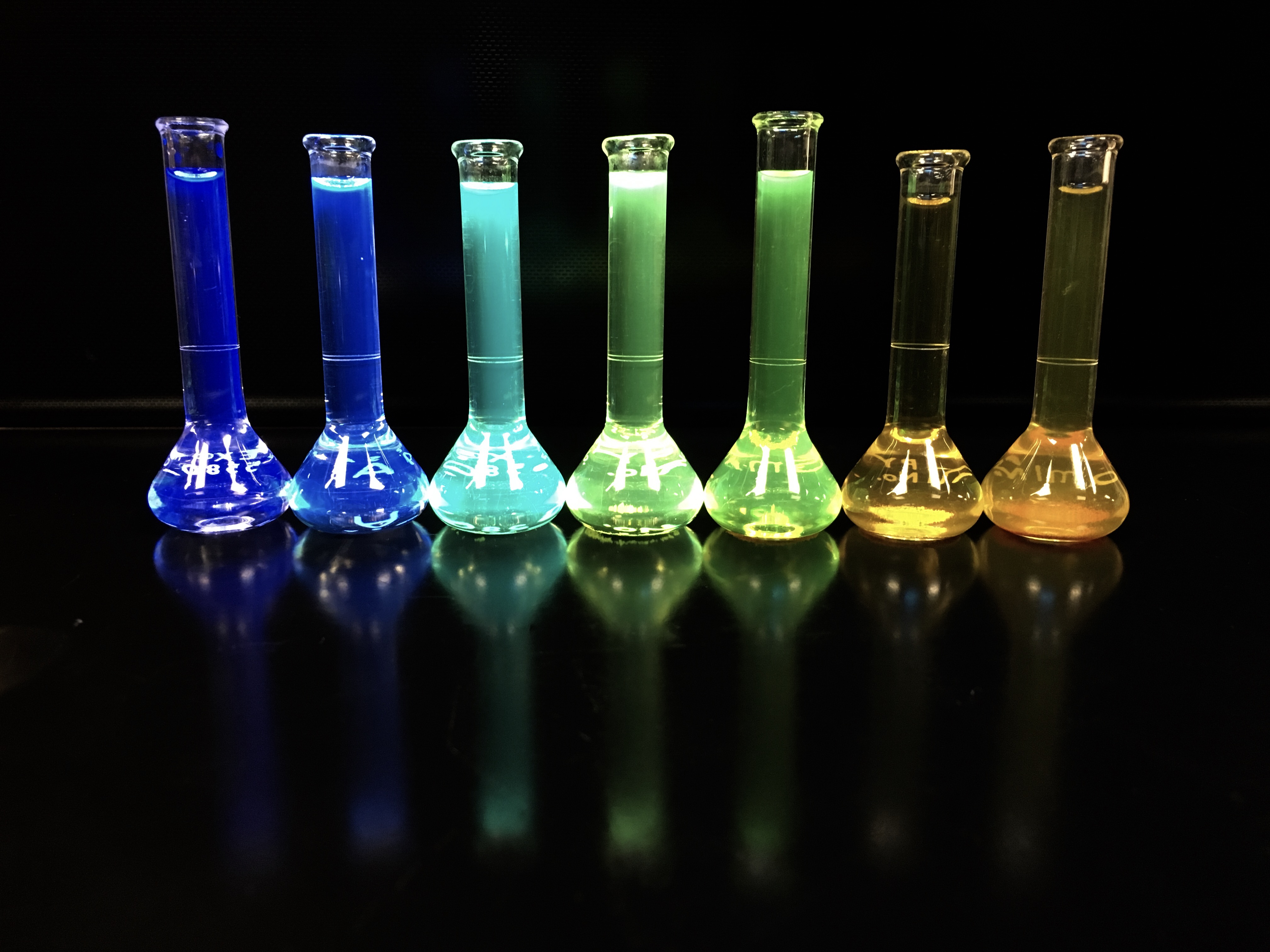
- Boron–Nitrogen (BN) Fluorescent Molecules: We design, synthesize, and investigate novel fluorescent molecules containing a three-coordinate boron atom bonded to carbon, nitrogen, and hydroxyl groups. By introducing the boron–nitrogen bond into polycyclic aromatic hydrocarbon organic fluorophores, we can systematically tune their electronic and photophysical properties. Our work seeks to understand how the B-N bond incorporation influences intermolecular interactions, emission behavior, and material stability, thereby enabling the development of next-generation sensors, imaging agents, and optoelectronic materials.
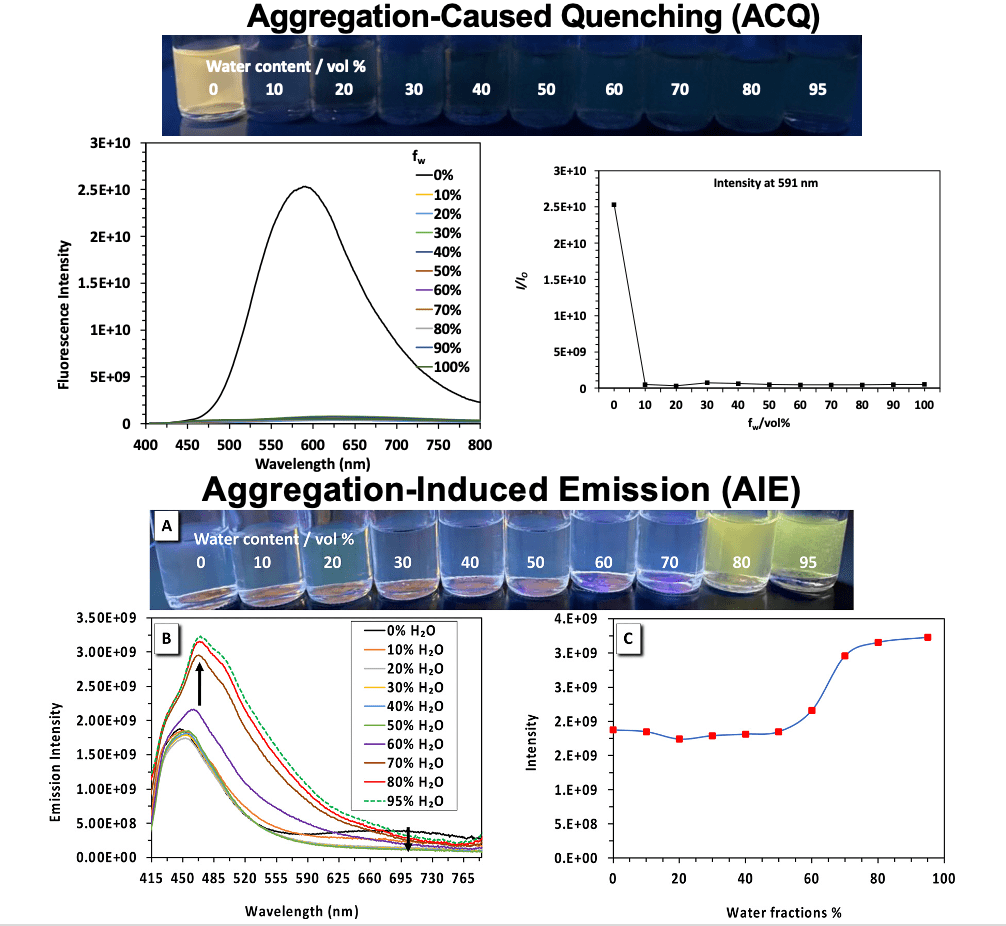
Keywords – Azaborines, Organic Chemistry, Photochemistry, Aggregation-Induced Emission, Aggregation-Casued Quenching, Solvatochromism, Thermochromism, Fluorescent Organic Materials, Synthetic Methodology, Photoresponsive Materials, Biological Sensors, Photolabile Protecting Groups, Photocages.
 Saint-Louis Research Group